

Pass to Power: What is Race and Passing?

Update: I posted this 666 days ago but blue eyed devil Rachael Dolezal is back in the news with her snake oil version of racial identity. She got a book deal and all I have is this blog so I’m reposting this in hopes someone may share it with her and read educate this white woman-Rachel, please have several seats, and be humble.
Busted: Rachel Dolezal, Howard Graduate, Head of the NAACP in Spokane, and outspoken black community activist is white. Outed by a local reporter and mercilessly–and hilariously–taken down on twitter Rachel has sparked lots of chatter about what is race and who can be which one. Passing points to the essential function of race–that it structures power, not color. People who pass are not trying to look different, they are trying to change their status.
Race is not in our DNA, it’s a social construct. That means, despite what your eyes see, there are not different races of people. In fact, there is no gene for race in the human genome. Biologically, humans are all part of one family.
So, if race isn’t real, then we can just say racism is dead, yell, “Black President!” and get on with it right? Wrong. I mean, have you read this blog before? Since the birth of America, race has been used to structure, economic and political relationships. Prior to the 1600’s race really wasn’t a thing. People had and still have different cultures, but not different racial categories. The first time the word race even appears in the English language is 1508, so the Ancient world did not have the concept of different races.
With the conquest of the Americas and a fresh addiction to sugar, European conquerers needs many hands to make the hard work of sugar, tobacco and cotton farming light. But, since the America’s were little more than a handful of rough outposts, they couldn’t attract a voluntary workforce with crazy benefits like being allowed to live free and get paid. Thus begins the transatlantic slave trade, one of the darkest events in all of human history.

Race as a social construct was created essentially to protect this labor force. Many laws–not just one–over hundreds of years were used to keep one class of people–black people–enslaved. Politicians traded power for allowing the perpetuation of the institution of slavery, even our conflicted founding father Thomas Jefferson. He wrote all men were created equal, but could not build the country he desired without those free hands to do the work.
What would get good God fearing people to support the systematic violent oppression of their human brothers and sister? A story, a narrative that normalizes terror as truth. At the center of the narrative was the concept that blacks were not humans, and therefore did not deserve human rights. While the institution of slavery ended 7 generations ago, America still struggles to shake this narrative.
Racism is supported by personal prejudice. Individual beliefs about different groups of people perpetuate the kind of thinking that allows police to kill young people unchecked by the electorate. But even if every person in America woke up tomorrow firmly antiracist in their heart, the laws that structure education, housing, economics, justice and other systems would still have racial bias in them. Like a zombie–we may be the body, but if the zombie brain of racism lives, terror ensues.

Over the centuries, hundreds if not thousands of people have tried to game the system by “passing”–taking on the identity of a race other than their own–mostly white. Whites were able to be free, vote, own land–and slaves–and a host of other privileges that came with whiteness. These privileges–which still exist in different ways today–helped keep people bought in to systems of oppression. Black people willing to give up their culture and their ancestry could take on all the benefits of whiteness as long as they stayed hidden.

In a country where whiteness is too often invisible to white people, Rachel wouldn’t be the first white girl to long to have a (different) culture. No boring suburbia for her, Rachel takes cultural appropriation to a whole new level. No matter how many Mileys and Iggys try to beg ignorance, appropriation is real–and real simple to understand.

Imagine culture is an iceberg. Certain parts of it are visible–food, dance, dress, festivals–while the foundation of what makes a culture are buried deep below the surface–beliefs, values rituals, shared lived realities and ways of being. Millions of people of African decent, shipped abroad during the slave trade or settled here in America carved out a way of surviving , a way of being in the face of unstoppable cruelty, a way of thriving within a system built to destroy them. The soul food, and the blues and the style and hip hop are the visible parts of the legacy of this ongoing struggle, but the deeper elements are essential to making sense of those expressions. Cultural appropriation is when you break off the top of the iceberg and wear it around like a costume. You can dress up, dance, and even bite the rhymes of a culture….

But when you do, you leave behind the larger, more important part of culture: the deeply help beliefs, shared experiences, values, ancestry and destiny-the truth of what it means to be part of that group. This part of the iceberg can’t be pulled out of the water and worn to the VMA’s. They can’t be weaved onto your ends like Hawaiian silky. They can’t belong to you, Rachel, or you either, Iggy.
All of these women cover themselves in a carcass they call blackness made out of stereotypes, stolen hairstyles and narratives that they’ve nicked to make themselves feel cool, beautiful, feel like they are a part of something. At the same time their white privilege gives them entrance into public spheres often denied actual black women, taking their voice and supplanting it with a white fantasy version.
And Rachel was a teacher, someone paid to tell other people how to think about and construct black femininity. This is not how you love a culture–this is how you erase it. Far from helping the community as some–including the NAACP–have suggested, her actions show the worst kind of white privilege–the privilege to define blackness with a white voice.
(Be sure to read upcoming part 2 about the difference between transgender and transracial)
Why So Serious, Jerry?

Jerry Seinfeld let drop in a recent interview that he doesn’t play the college circuit because those meanie students cry racism and sexism too much.
Seinfeld said college students don’t understand racism and sexism. “They just want to use these words: ‘That’s racist;’ ‘That’s sexist;’ ‘That’s prejudice.’ They don’t even know what the f—k they’re talking about.”
Well, as a professor, I know that not every student does their homework, but maybe what Seinfeld is seeing is a generation of kids that don’t want to be racist of sexist, so they call out what they see. Does PC catch some of the wrong fish in its net? Sometimes. But to blame the death of comedy on people who don’t think racism and sexism are funny? Hold on.
Chris Rock, Louis C.K. and Margret Cho are all top billed comedians with long careers who do talk about race and sex without dragging out the PC police every time. Comedy should talk about our most sticky issues–a little humor makes the hard things easier to say and think about–but it takes a comedian who can write a joke AND understands these issues. If Seinfeld can’t talk about women or people of color without being offensive, then just stick to what he truly does well–jokes about nothing. As for college students learning about racism and sexism, leave that work to us in the class.
Dogs End Racism!

Or so goes the hope at the center of pedigree’s new ad campaign. Feed the Good is Pedigree’s new worldwide campaign. Spots designed for the US, Australia, and Brazil will take on serious local issues with a velvet fur glove. For the US spot, personal racial bias is the problem, neatly solved with a wet sloppy tongue kiss.
If only it were this easy. The critic in me says that the ad is full of dog whistles, from the boys sitting on the curb to the sirens in the background. The dog lover in me knows the power that animals have to break down the walls of social rules we build between ourselves. I want to see a world were we don’t need a dog to see the humanity in others, but until then a little kiss couldn’t hurt.
How Black am I?

We love to take pictures of ourselves. We love youth. So, its only a matter of time that we get an app that looks at our selfies and answers the age old question: do I look old? How-Old.net is a simple site that allows you to choose a picture and, using facial recognition software, it will guess your age. While trying to find a picture that would tell me I looked young, I found something interesting. The site told me I was not-so-old (great!) but at least it could see me–my Ghanian husband: not so much.
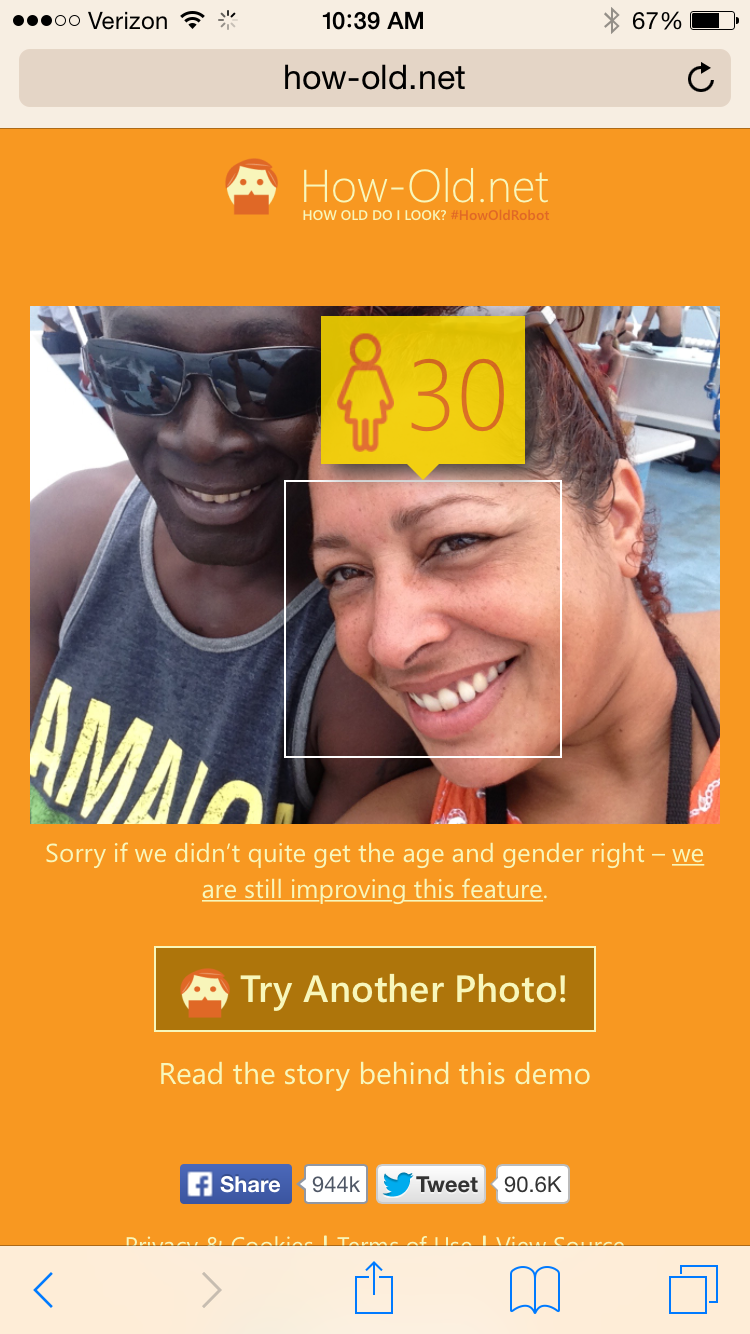
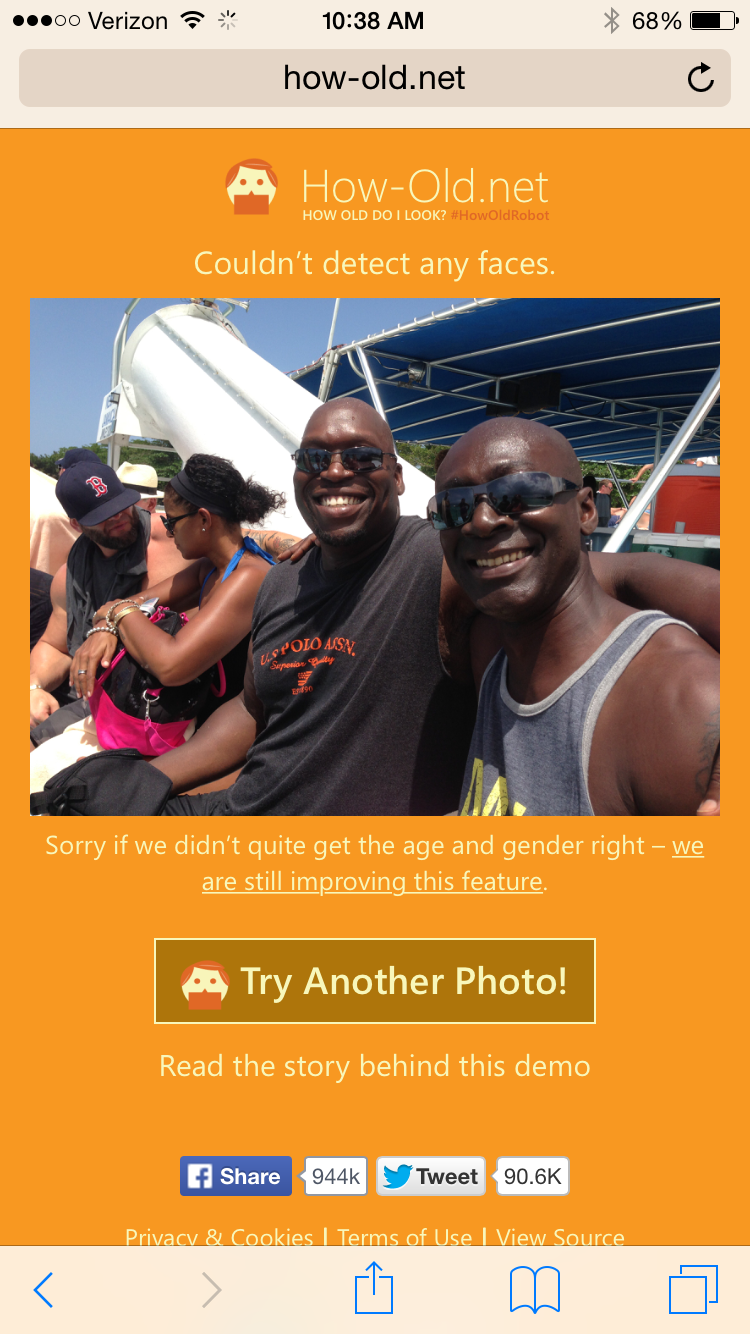
The site had a hard time seeing dark-skinned black faces, whether in the bright sun with plenty of light
Or sipping cappuccinos with pinkies up, the app couldn’t recognize my fabulous husband or his friend.
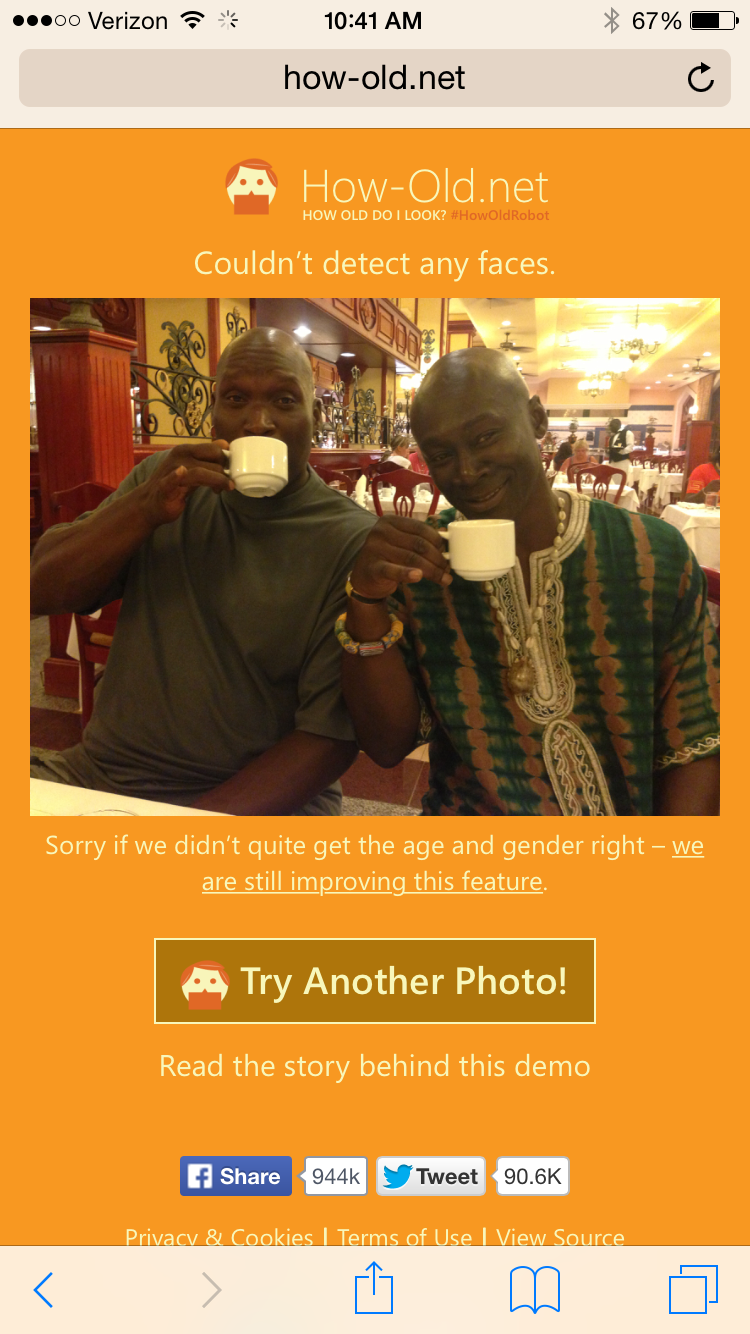
It’s bad enough that black lives have to demand that they matter to be visible. Now they are erasing us from our selfies?
Summer Smokes

I was out getting summer plants and beach chairs when I happened on this old school summer favorite:
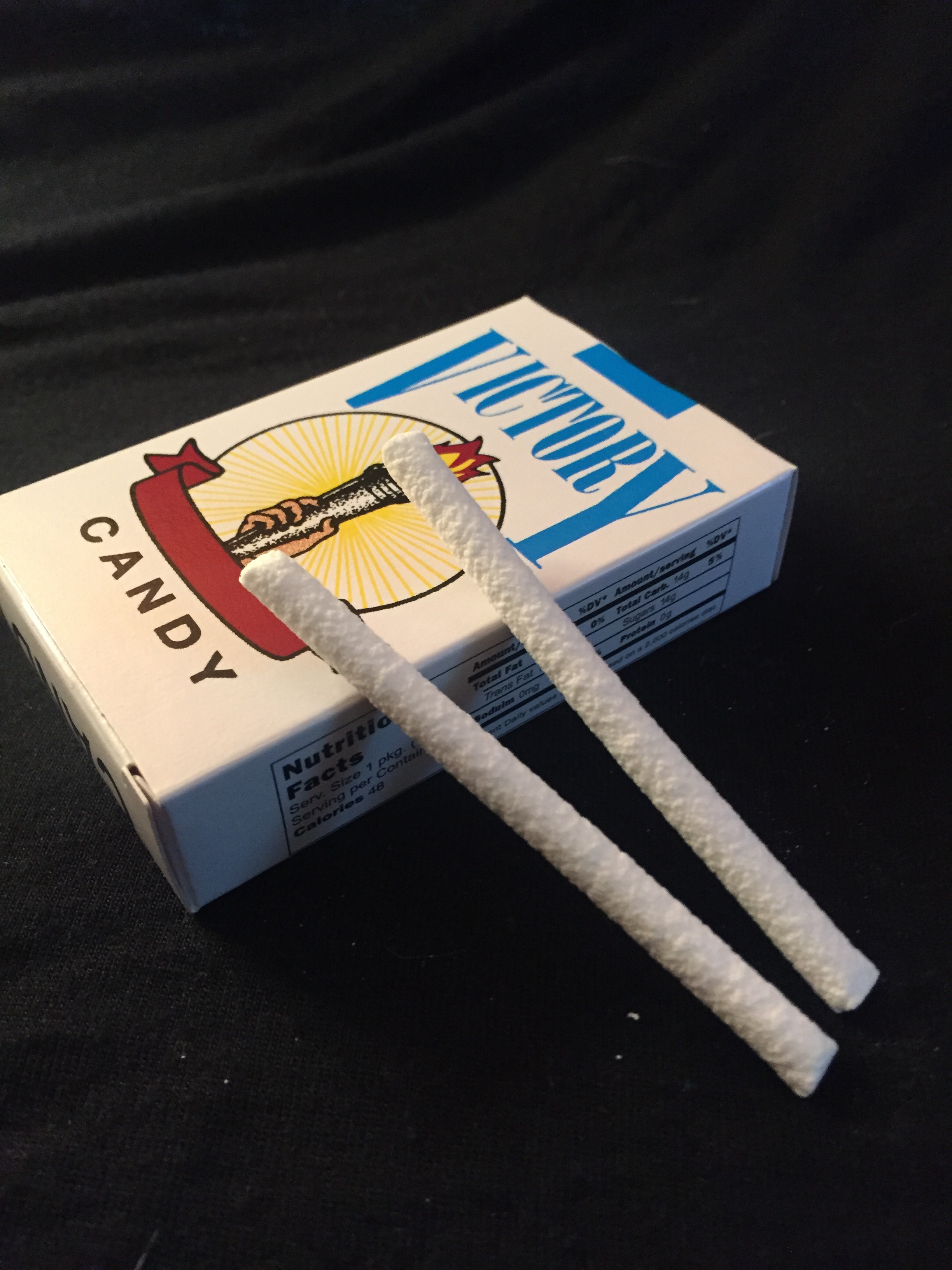
Candy cigarettes! Yup they still make that. I’m old enough to recall puffing these flavorless sticks of sugar after our trips to the candy store in Orleans on Cape Cod. That was long ago enough to suprise me when I saw they still make these gateway snacks.
 Sure the work cigarettes is gone, but the box, complete with european union style tax stamp at the top let’s kids know its still cool to smoke ’em if you got ’em.

Maz Kanatamima: From Pretty to Pirate
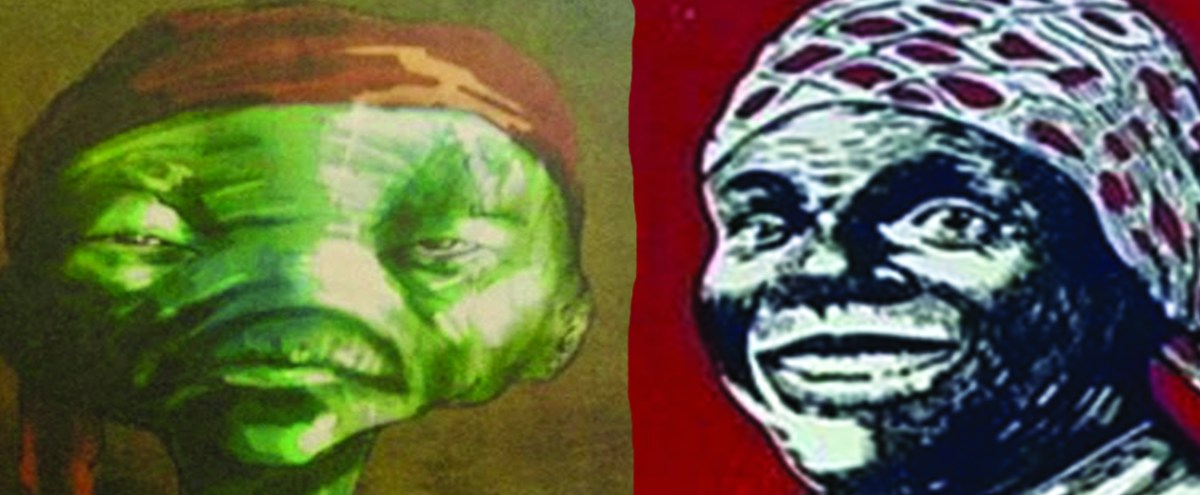
If you’re a Star Wars fan at all, then you’ve probably already watch ed the trailer for JJ Abrams directed reboot Star Wars VII The Force Awakens. And if you haven’t watched the trailer with Matthew Mc Conaughey, then you haven’t seen the trailer at all.
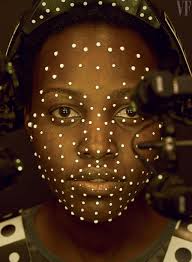
I’ve been waiting to see the reveal of Lupita Nyong’o’s character. Sure we have already seen Han, Chewie, and even John Boyega, as a black storm trooper, but we had yet to place Lupita’s lovely face in space. Here she is!
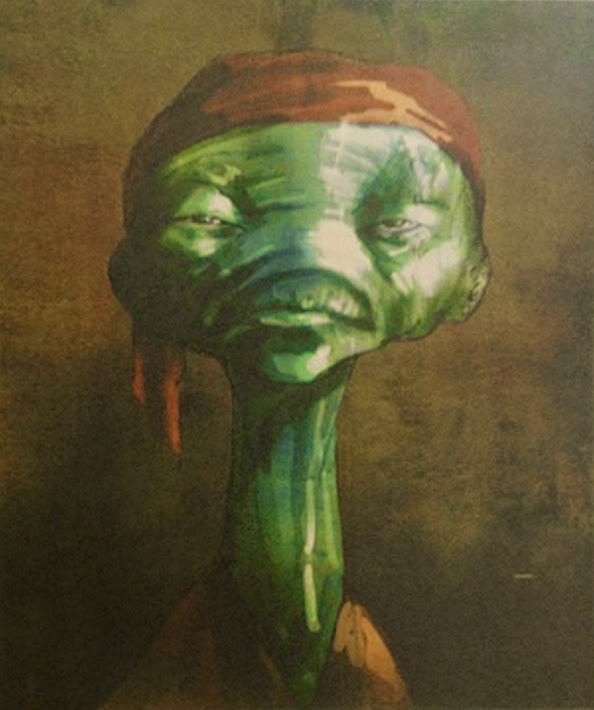
Yep, that’s right, for all those black girls who rock looking forward to seeing a darks skinned sister traveling the stars, you’ll have to keep waiting. Early reports had cast Lupita as Ventress, super-assassin and stylish shade throwing villain.

But alas, we’ll hear her voice coming from the face of CGI created space-pirate. According to wookipedia–experts in all things Star Wars–Maz Kanata is a pirate, and according to a Vanity Fair article, she can also tell fortunes by touching objects. Okay–I don’t want to jump to conclusions about an old ugly creature with a rag on its head who can can tell fortunes *cough cough magical negro cough*. By all reports, Maz Kanata is in charge of a sprawling castle and space outpost, so she’s sure to have some juice…. But in the looks department? Meh.

The Star Wars series plays host to some strong and interesting women, but also a whole universe of racial stereotypes. Most notably, West Space Indian Jar Jar Binks.
Don’t forget from the Asian-like traders to the animal like jungle creatures, lots of characters in the stars look suspiciously like stereotypes here on earth.
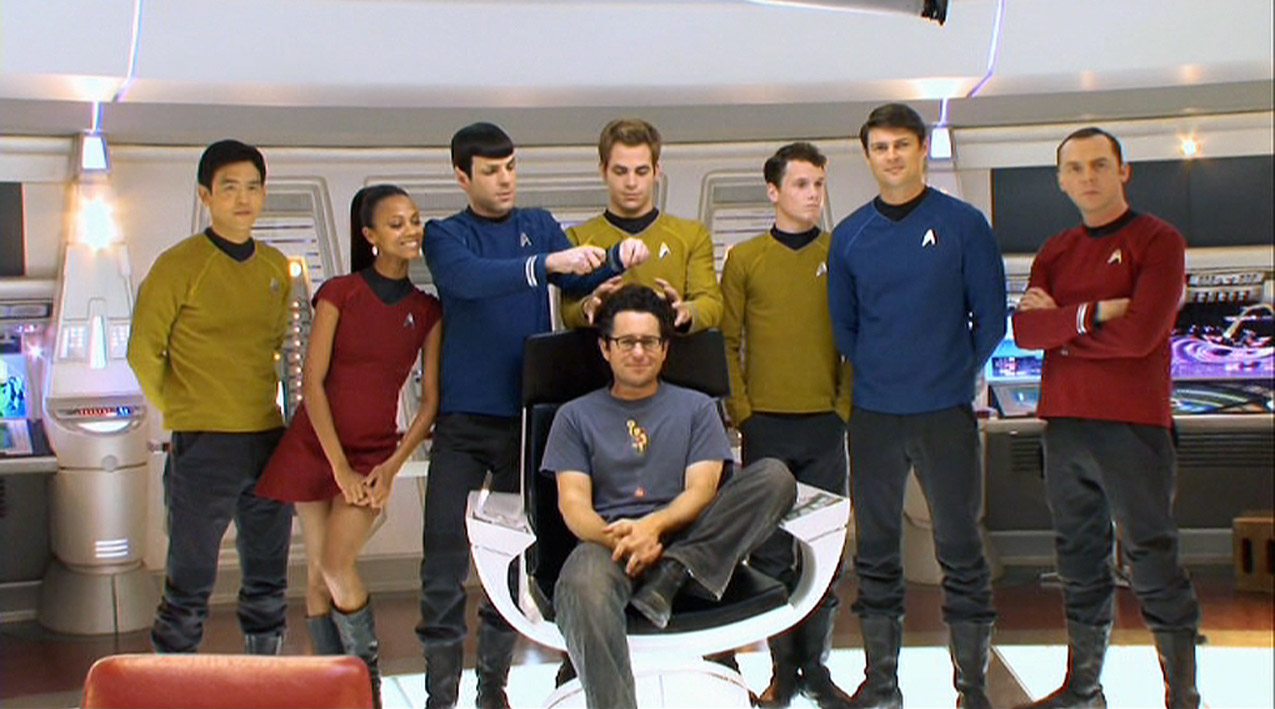
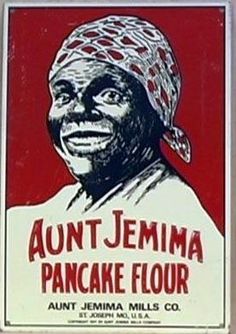
J.J. Abrams is known for updating the Star Trek series, envisioning a multicultural mecca with strong characters of every stripe. Creator Gene Rodenberry designed Star Trek to be that way from the beginning. Star Wars, on the other hand, traded in stereotypes to simplify a complex galaxy, so there’s a bit more heavy lifting to make the galaxy a post-racialtopia. Let’s hope Maz Kanata is more than a do-rag-wearing-fortune-telling-Aunt-Jemima-looking African pirate.
The Force Awakens Matthew McConaughey

When a movie trailer makes you feel all right, all right:
Cops’ Lies and Videotape

TRIGGER WARNING: this article uses links to police brutality. Videos are used here to emphasize the graphic nature of available video content that has yet to result in widespread radical police reforms. It is my experience as a professor that many students have not seen the videos included here.
Walter Scott was shot in the back while fleeing South Carolina police officer Michael Slanger who now faces charges of murder. What made this case so different from ones before it? When Walter Scott ran for his life, fearing quite rightly the cop who fired 8 times across 15-20 yards, Feidin Santana turned his cell phone on and started taping. Clear video evidence of Slanger shooting the victim, then apparently planing a taser nearby to support the official report he filed that sounds like a broken record of police abuse: “He was a threat to public safety. I was in fear for my life. I had to shoot him.” The video Santana shot gave lie to the official version of events, resulting in murder charges again Slanger, and renewed calls for cameras on cops.
No doubt the constant cascade of black lives culled down at the hands of the state can leave us hopeless, wondering what it will take and what can be done. The power of Santana’s video in this case, and the importance of its incontrovertible evidence in forcing the process to bend toward accountability cannot be overstated. Justice in this case was on its way to being denied before the video surfaced. So can video be the answer?

After each of several recent high profile police shootings, much attention has been focused on putting cameras on cops. Body cameras are already being used in many police departments across the country. The logic goes that if there are cameras on cops, then there is a record that will allow us to see first hand what cops are up to. And for those few bad apples, the camera will act as a deterrent from their crimes. In fact, stats show that officer aggression is down when cops are equipped with rolling a/v. Though sometimes those apples shut the cameras off…..one report places officers’ compliance with camera policies as low as 30%.
The problem with this argument is that it assumes that bad police shootings are simply a function of a few bad cops gone rogue. The root of police brutality, however, lies not just on the individual “bad cops”, but on the justice system that they represent, and the racism that has been a part of that system since the first enslaved Africans arrived in Jamestown.

Increasing the visibility of police brutality ignores the deep roots of systemic racism. The police are the pitbull and the end of the leash of the state. Police are charged to serve and protect, but the state is responsible for training, monitoring and disciplining the police.
After video of Rodney King surfaced in 1991, it seemed certain that police brutality’s days were numbered. After all, if you watched the video, you couldn’t deny what you were seeing was wrong, right? But then those cops got off, and the killing of black people by police continued.
In August, we watched heartbreaking death of Eric Garner at the hands of the NYPD. We watched him die in front of our eyes. The video couldn’t be clearer. There was no way justice could be denied. But those cops got off, and the killing of black people continued.

Now in South Carolina it looks like their trying to get it right…only four days after, when Santana was prompted to bring the video to light because the police were lying, blaming Walter Scott for his own death. Video is forcing them to come correct. The default setting, though was a police force eager to cover up the death of an unarmed black man. Video can make them come clean, but it doesn’t challenge the dark heart of their policing practices.
Video evidence can no doubt help get justice, but only after the crime has occurred. Cameras on cops? Absolutely. But the presence–or absence–of videotaping does not cause, merely captures, police brutality. A longstanding history of police brutality in the black community needs a complex solution including increased political access as we saw in Ferguson’s recent city council win.

Citizen accountability boards and community groups looking can provide a feedback loop to help nip problems in the bud, and make sure the community can trust those charged with their safety.
To do the heavy lifting ahead, we need an educated and culturally competent electorate that leaves denial behind to chase our dreams of all being equal. Unless the many people that still blame blacks for their own victimization rejoin the all too real world of rampant racial injustice it will be hard to have the kind of electorate that will hold the Sate and local governments to heel aggressive police tactics.

Putting cameras on cops will end police brutality no more than cameras in every connivence store have stopped armed robbery. Video didn’t stop sexual assault, instead it created a whole new platform for degradation. Even now videos of blacks being attacked by police play as both tragedy and trope.
Video won’t bring Walter Scott, or Eric Garner back. Video alone is not enough.
D’J. Cole

J. Coles reminds us that together we can dismantle the master’s house.
 Susan X Jane