
Pink Pony front woman and daughter of the governor of Oklahoma, Christina Fallin was really feeling a deep connection to the Native Americans she grew up around. So deep that she posted this picture of her wearing an admittedly-stunning-though-sacred-so-you-probably-shouldn’t-pose-in-it-for-Facebook headdress on her band’s Facebook page.

She titled the picture Appropriate Culturation, so she clearly presumably knows what cultural appropriation is and is trying to be clever. She also apparently decided to redefine it and made herself the appropriator of the appropriateness of cultural appropriation. Yay! She now decides when people from one culture can rock the ritual and sacred items from another culture as “fun accessories” or funky fashion for flaunting their deep spiritual connections.
Too bad no one told the many peoples who belong to the cultures for which she is the appropriate appropriator of cultural appropriateness. Thus, her Appropriateness had to issue this royal proclamation from her cultural fantasyland apology.

Sigh. Next time, just let your mane flow, little pony.
High school sports are an important part of the teen experience, teaching young people character, sportsmanship, cooperation and…racism? If you’ve been frequenting the high school sports scene, you may have noticed that racism has been added to the after school curriculum.

Take , for instance, the hostility leveled at players during and after a game in Mahopac, New York. Fists flew in the stands following taunts of the visiting team, including the N word. When Mount Vernon, New York players took the game 43-40, the racial slurs from Mahopac players continued in the Twitterverse.
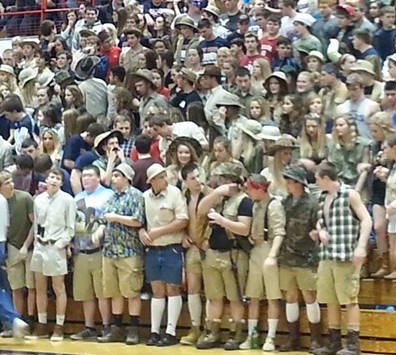
Mahopac is not alone. At a high school girls’ basketball game in Bedford, Indiana, Lawrence North High School players were greeted by Bedford North Lawrence High players wearing gorilla suits and safari gear. Adults in this school dismissed criticism, saying costumes were worn throughout the season., giving students a quick lesson in doubling down rather than open up to listen.

Or take the case of the Phillipsburg boy’s wrestling team. The boys posted this picture after beating their rivals from Paulsboro High School. The picture, featuring two of the wrestlers wearing pointed hoods, drew criticism, followed by a team apology.
What is interesting isn’t the frequency–though that is worth noticing in what too many think is a post racial world–but what follows these events. Out come tempered apologies as if their actions came as a surprise to the perpetrators themselves.
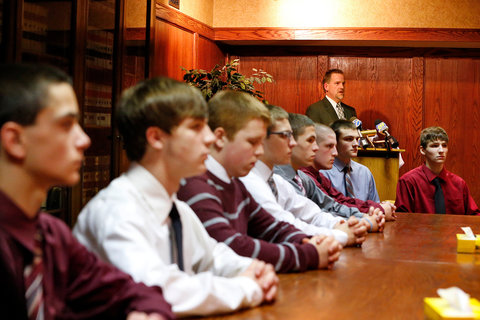
Young people in the process of learning to become adults make mistakes. That “not knowing any better”, “not noticing “, and “not meaning anything” continue to be accepted as apologies for racist behavior seems to be a mistake the adults are making. Besides, such statements strike me as insincere: racist words and images are used precisely because of the power they wield. Saying you don’t notice is at best an indicator of your ignorance of others’ and at worst a lie.
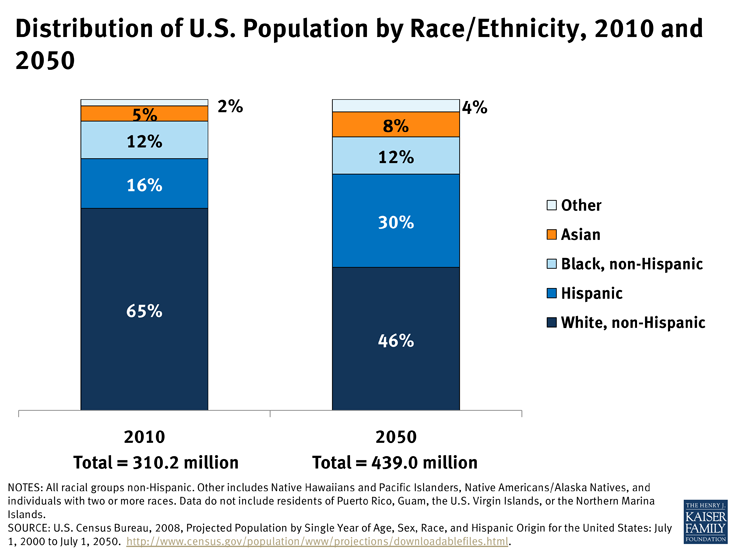
As America continues its inevitable march to being a majority minority country–meaning the majority of American’s will belong to a group we now consider minorities–educational institutions need to do what they can to foster greater understanding of race and culture. Since you cannot understand what you don’t notice, people need to learn to see cultural difference with respect instead of fear or loathing. Being aware of images and symbols of race is not hypersensitivity, it is cultural literacy, a key skill for every educated individual living in a multicultural country. Schools seem like a perfect place to start.
Happy International Women’s Day! Today the world pauses to celebrate 50% of the world’s population–women. Now you might be thinking: ‘Since women make up more than 50% of the world population why should they get their own month and when will men get a Men’s Day and Men’s History Month? This is so unfair!’ Hold up.
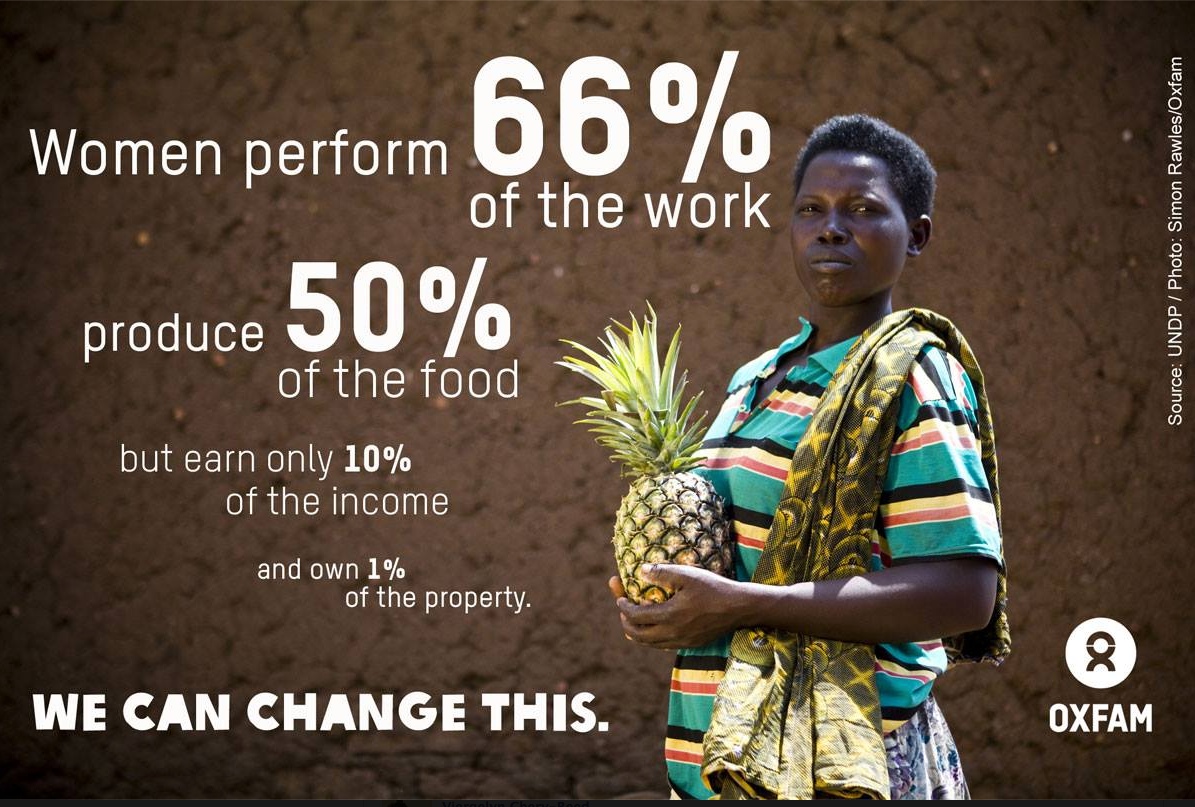
Even though women make up 50% of the world population, they don’t have an equal share of financial wealth or political power. Globally, women do 60% of the labor, but own less than 1% of the world’s property. That’s right–women in the U.S. included–women hold only 1% f the world’s wealth.
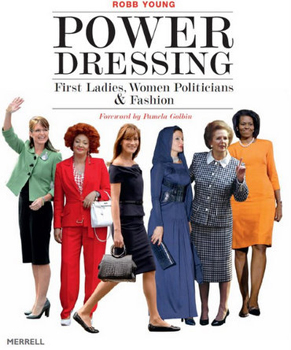
When it comes to politics, women still don’t have equal representation in government. Even when in office, women continue to combat stereotypical commentary on their looks and family roles. Again, don’t comfort yourself by thinking this is only the situation in the developing world. The United States has not had a female at the helm in the history of the presidency. If Hilary takes the office in the upcoming 2016 election, that’s still 1 in 44.

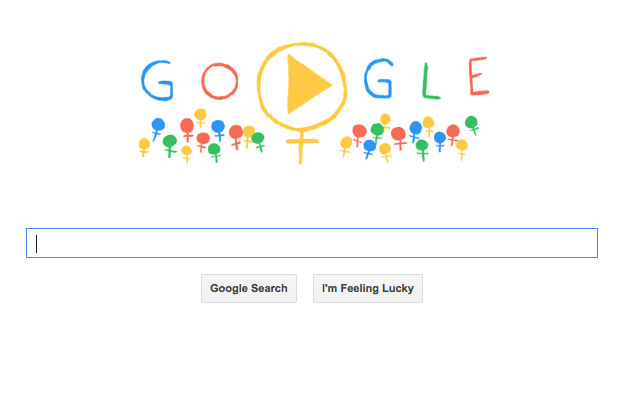
Even the most unscientific research–Google Auto correct– reveals the uphill battle women face in the fight for equity. How do we think of who women are? What can they do? What should they do?


 Okay, so we’re like bacon, shouldn’t vote or work, and can’t have it all. It may not be scientific, but these ideas are popular–that’s why they rank high in the search terms. I’m sure you’ve heard all these ideas about women before–except maybe the bacon thing….or maybe…

Interstingly, our not so scientific study has one more finding. When I entered “women deserve”, Google had nothing to offer…
 So even as Google and the rest of the world celebrate women in today’s doodle, the wider discourse about women continues age old patterns of inequality. Raise your glass to amazing women today, but even as we celebrate Women’s History Month, let’s plot to break out of March and claim our 50%.
Now that the Academy has finally awarded Best Director to a Black man for the first time in its 85 years–wait, what? they didn’t?oh okay,sorry Steve, awarded 12 Years A Slave Best Picture, along with Best Supporting Actress and Best Adapted Screenplay, many will be ready to celebrate another milestone on our way to post racial America.
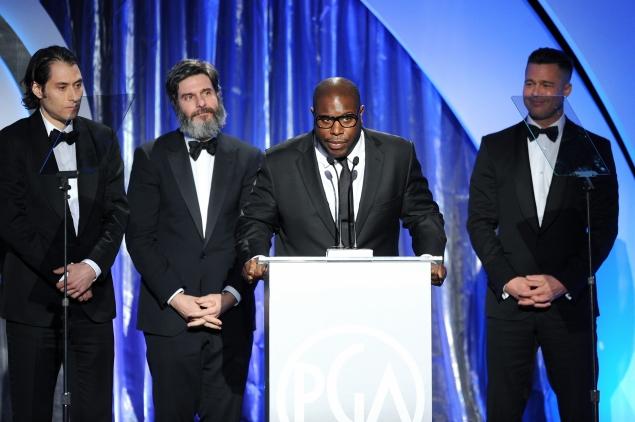
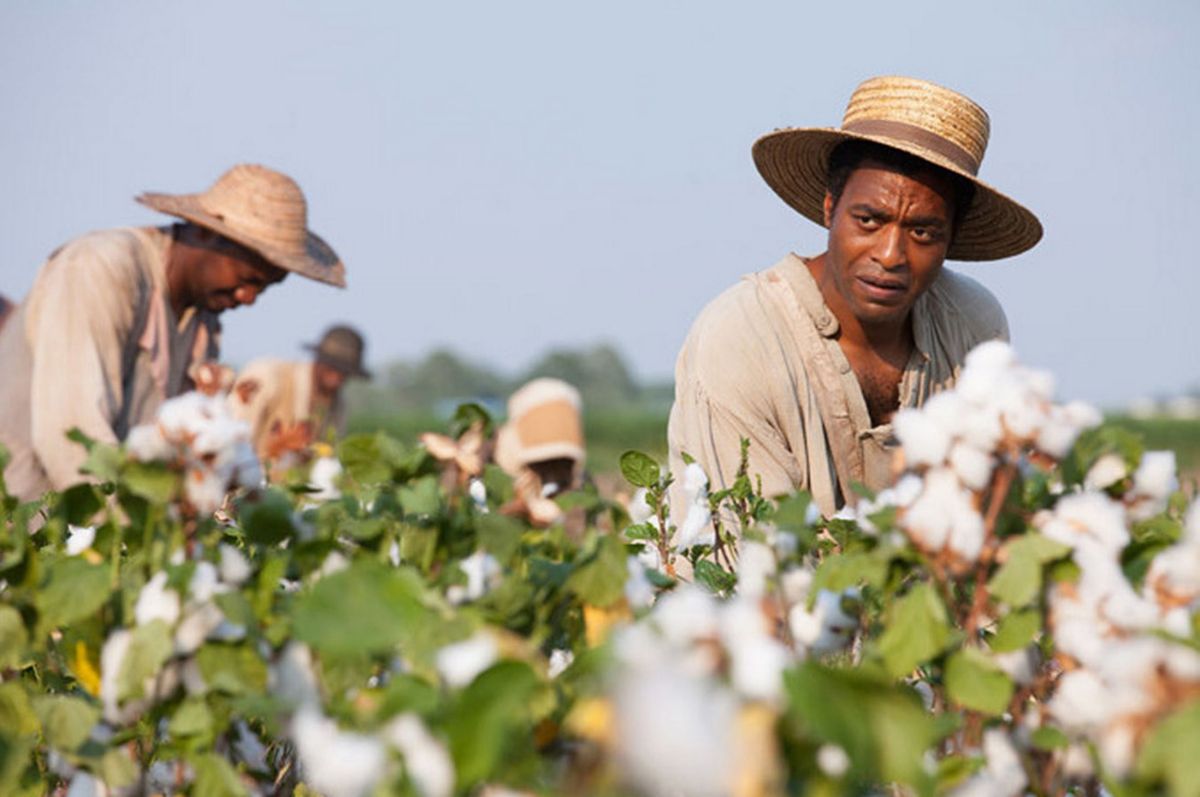
Though we too raise our glasses to this fine film, we hope this marks only the beginning of Hollywood’s foray into exploring films about the black experience in America, rather than a destination that ends forever in the past.

Despite the power of the film, Hollywood again gives the nod to a film that depicts the darkest chapter of American history, like Amistad before it, but keeps it in the distant past. Issues of race are still present in modern day America, and Hollywood too often misses the opportunity to engage us in thinking about race as something other than a historic setting for period costumes and the exorcism of old guilt .
Fruitvale Station, a film that asks us to confront more recent versions of racial injustice, is notably missing from the field. Also missing from the Academy’s most important stories are representations of people of color that veer from gangsters and slaves.

Look at the wide variety of characters that other nominees are playing this year. Awards do let Hollywood know that stories are worth watching to audiences. Here’s hoping that this award leads to a wider array of films about people of color.
In a field of giants, Barkhad Abdi was in good company for the Best Supporting Actor Award. While he didn’t win for his depiction of a Somali pirate, not a bad result for his first acting career.

In the flash of Hollywood, it can be hard for a first time actor to hold on. When that actor is typecast, it can be even tougher. So that then is the struggle ahead for Abdi.
Without a lot of roles for Somali pirates, or even general African badies, Abdi has had a hard time nailing down his next roles, despite the accolades. Hopefully he’ll find his footing free of seas legs.
Once again, Lupita Nyong’o kills the red carpet in an ice-blue Prada that she helped to design.

With her powerful performance in 12 years a Slave, she’s been a fashion forward fixture all awards season.

While her style is well worth watching, here’s hoping that she shows up in as many future films as red carpet gowns. Check out this very thoughtful plea to remember her acting chops. With her super svelte style, we shouldn’t overlook the fact that It girls like her are most successful when they act, not just act pretty
Vanity Fair’s Hollywood issue seems to show the joyous post-racial status of Hollywood. But hold on to your popcorn. The fine people from Lee and Low books put together an infographic breaking down the diversity–or lack there of–in the Academy Awards. The numbers show when it comes to Hollywood, you may need a passport because it’s a different country.
 The numbers clearly show a lack of diversity. Numbers, though, are just the beginning. Both quality and quality are key to better media representations.
The Academy Awards broadcast is the single biggest television viewing event for females, the “Super Bowl” for women.

Despite the fabulous gowns, the Academy is still a boys club. Diversity behind the camera is just as important as the diversity on the screen.





 Susan X Jane