One Day

1 Its cold and traffic is terrible as the Uber inches ahead toward the light. I look out the left-hand side window and see row houses, thin, stacked up against each other, some remodeled, others older and decaying, their history in plain sight. Row houses in Georgetown were created to house the slaves and free blacks who came to Washington D.C. to build the nation’s capital. All day streams of tourists milled about the monuments, gazing up at the great men credited with creating our great nation but here too is a memorial, small broken down houses, now caught up in a storm of regentrification with tiny rooms going for $800 per square foot.

The light changes, we inch forward and then break free around a corner. Outside the cold air whips at my legs, and at the dashikis and Ankara skirts the crowd is wearing to go see Black Panther. Inside, movie-goers in yoga pants and flannels are heavily seasoned with a crowd dressed to go see the crowning of an African Prince. Their bright shirts and pants, carefully curated outfits that only hours earlier were laid out on beds, hanging in closets, waiting patiently for a moment—this moment—to be rocked in all their glory. Inside, the bright colors are invisible in the darkened theater, full to capacity for this one of five or more showing the theater had. The lights go down and we go home.

2 She is on the ramp from the first floor to the second, starring out from a wide cotton field half the length of a football field. Her face is tilted slightly, with the sun shining in the reflection of her dark skin. Her head is wrapped in white, and a bag for the cotton she picks is slung across one shoulder. The whisper of a smile or a smirk plays on her lips. Is she smiling? I have seen faces like this before—in the Ghanaian auntie sitting on the stoop of the house in Accra, in the face of a woman waiting for a train in Boston.  I feel like she is looking right at me. I look back. I know she can’t see me, but for some reason still, I feel like she can. I have seen her here before; well, of course, she is here every day, posted up in the National Museum of African American History and Culture in this huge photographic mural.  

I was here a year ago, on the day of the women’s march. Then too, in this place housing perhaps millions of black faces, her face alone stuck out to me. I stood on the ramp, arrested by her looking at me. Did she know, or even hope that one day her kinfolk would fly through the sky to come to this copper memorial to her suffering and the triumph of the enduring hope for freedom? Could she ever have imagined that we would stand here, face to face, two women across centuries living in different worlds who are no less than relations? I want to talk to her. I want to tell her we made it. I want to tell her we have so far to go. I want to ask her about the story written on her face. I want to know if I am doing all she hoped we would. Is she looking at me?

Now back at the museum, I thought maybe her impact would be different this time. Maybe the intensity of her gaze was a projection, my mind racing to find connection amidst the painful history inscribed on the lower levels of the museum. But she is here waiting for me. I feel her before I see her, waiting patiently for me to process up the ramp towards her. I stop and we connect. People pass behind me—after all, this big photograph has no label, is not carefully lit so as to encourage viewers to stop and look more closely, but still, she is what draws me. I stand for a while. I wish there was a bench right here. She is nameless, an unknown slave lost in a wash of history, but right now we are together. I want to tell her I couldn’t wait to see her, that she is my favorite. I want her to know that I love her. I want to know her wildest dream: I want her to know that I am trying to make her proud.

3 I need to buy a suit. I need to buy a suit so I can get a new job. I have been a professor for such a long time that I don’t own a suit anymore. I want a black suit because I love black. He tells me it should be blue. I think he is wrong but I don’t really have any evidence. He has been in financing and corporate America for decades while I have been in the ivory tower so I cannot be completely sure that he is wrong. What do I know? I try on the navy blue and look at myself in the mirror. Who is that? I don’t look like me. I tell him that and he shakes his head. “ It is what it is.” We have had this conversation before. I know he is trying to help me; I know I don’t like what he is saying. I call over the attendant and plead my case. She agree, tells him ladies like black. I am vindicated and try on a black blazer while they chat about my suit choices.

Her: Ladies do love to wear black and its different for women than it is for men.

Him: But she is going to have to pay the tax

There is a beat. She is remembering. Her face, now serious and a little regretful turns to me.

Her: He’s right honey; you can’t just wear what you want. You’re going to have to be better.

I don’t want them to be right. I want to be able to choose. I want to be myself. To be myself and to be in white spaces is to be black, to be at a disadvantage that I can only overcome if I do more, tow the line. I have to be better if I want any chance of being equal. The suit will cost me $500. It will cost me $500 just so I can walk in the door and not be mistaken for the maid, for a cleaning lady, or an uneducated negro who doesn’t know what color suit to wear to a corporate job interview. I do not buy the suit. I buy instead an emerald green dress.

I will buy the suit next week.

The Revolution Will Not Be Commodified

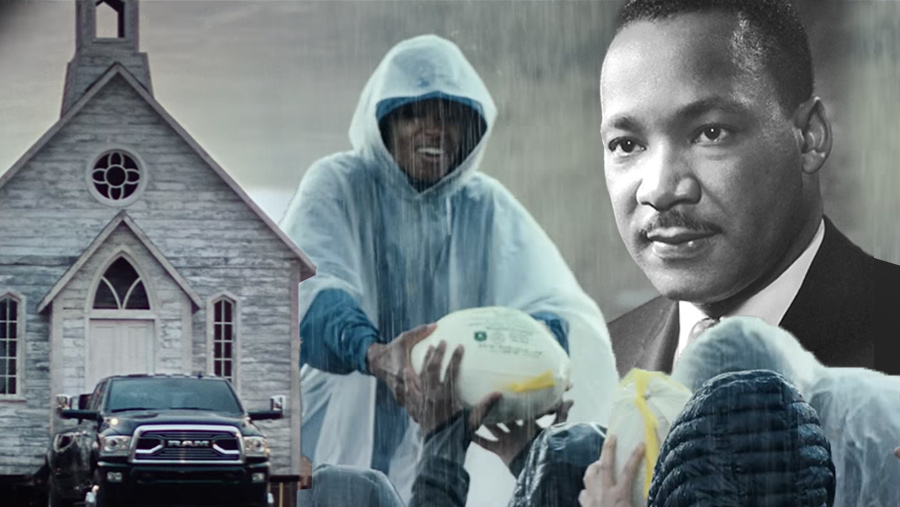
The Superbowl is  America’s highest secular holiday, a day where we celebrate the holy trinity of violence, fatty snacks, and great ads.  This year a 30-second spot during the Superbowl ran for a cool 5 mil.  Just like the teams on the field, advertisers have to go big or go home.  Making a play for the woke heart of America, Ram trucks gave us this spot, voiced over by none other than Martin Luther King, Jr himself.

Image result for ram truck MLK ad

Yup, this ad went too far in pairing the eloquent and weighty words of a civil rights icon with a five thousand pound piece of environment-destroying metal with a lovely crew cab.   The pairing is as good as strawberry milk and shrimp: the MLK voiceover is too meaningful to stuff its authenticity into a pickup truck and the truck ad does nothing to add to our understanding of the great leader.  Lose-lose, just like the Eagles Patriots

The twitter machine is already chewing Dodge a new ass for the ad, and the King estate has confirmed that they had no part in lending the icon’s voice to the advertiser.  By tomorrow, the tepid apology or some version of a mea culpa will slap back the controversy and we’ll move on to the next.

Advertisers are riding a razor-thin line when they leverage the political and social upheaval in the zeitgeist for their ads.  Those who are in touch with their audience and talking with them instead of at them can really use the moment to show an authentic connection with their consumers.  This T Mobile ad that also ran during the Superbowl tried to connect with consumers who care about a number of movements:

Brands are best when they jump into movements to get important messages out without hoeing out the message for the sake of the brand.  In case you missed it Burger King did just that recently with their whopper neutrality ad:

You’ve got to get in the game if you want to win, so brands are bold to not shy away from what is happening in the world.  But to actually win, you have to do your homework.  Companies do themselves and the movements they purport to care about a disservice when they use social change as a costume they try on to sell soda or soap or trucks. Stripping the important events of our time and filling it with the same capitalist messages that have fed the inequality leading to this moment can leave audiences upset, brands tarnished and important social moments cheapened. Do better Ram, or stick with your Vikings.

#MeTooButNotYou for Grammys

This year’s Grammy’s promised to be the most diverse Grammys ever!  There was lots of great music this year from a wide slate of artists, so it shouldn’t have been difficult to break the Grammy’s long tradition of marginalizing people of color, particularly in the Hip Hop community.  The night was looking good when Kendrick Lamar, current throne holder, kicked off the night with this en-fuego performance.

Not only was it dope, making raptastic mincemeat of Eminem’s much-heralded performance, but it was woker than Chris at the end of Get Out.  Dave Chappelle even had to check in to let people know they were witnessing peak black excellence.

Hi, I’m Dave Chappelle and I just wanted to remind the audience, the only thing more frightening than watching a black being honest in America is being an honest black man in America.

And he would know–watch the Bird Revelation for Dave’s own brush with honesty.

And that was just the opening.  The night closed with a planetary-sized sweep of top awards by Cardi B dance partner Bruno Mars.  Top song, album, and record awards went to Mars along with a few others, netting him 6 total wins for the night.

Blacks. Check.  Latinos. Check.  Woman. Check.  Bet the Recording Academy is feeling pretty good about itself right now.  It checked all of the awards show boxes, right?  Grammys are now officially Not Racist or Sexist!

Hold on, not so fast.  We Saw Bey slaying with hubby Jay z.  We saw SZA heating up the red carpet with her five nominations after a red hot year.  We saw Cardi B and Rhianna backing up the boys that won.  But no major Grammys were won by black women.

None.

grammyladies.jpg

But hey, maybe that’s their fault for not being creative enough.  Bey you slacker.  Rhi you lackluster sad sack! recording Academy President Neil Portnow has this advice to you:

It has to begin with… women who have the creativity in their hearts and souls, who want to be musicians, who want to be engineers, producers, and want to be part of the industry on the executive level… [They need] to step up because I think they would be welcome.

That’s right, if only Rhianna and SZA and  Beyonce and Cardi and Remy worked from the heart, were more creative, really leaned in to the industry, then they could get awards like the boys do.

In the era of #MeToo, the Grammys continue to look as modern as the Macarena.  Black women were shut out in all but the Gospel category (thanks, Tay), and women were largely absent from the winner’s circle.  Portnow’s comments are out of step with what’s happening in our country, and amongst the music buying audience.  It’s time for the music industry to catch up with the times.

While Hollywood applies itself to the task of moving beyond lip service to legal and cultural shifts towards equality, the music industry is lagging behind, stuck in patterns of pumping out patriarchy and normativity.  Music audiences already have more choices than ever before to access artist both in and out of the mainstream. If the music industry hopes to hold on to Millenials and their younger siblings, they will need to open up to be more inclusive.  I’m sure they will have their own tidal wave of sexual assault allegations, and the industry is still a long way from being racially conscious, but beginning to recognize and promote the amazing talent of black women is a good first step.  After all, a journey of a thousand miles begins with a single step–and a great playlist

#Oscarsjustslightlylesswhite

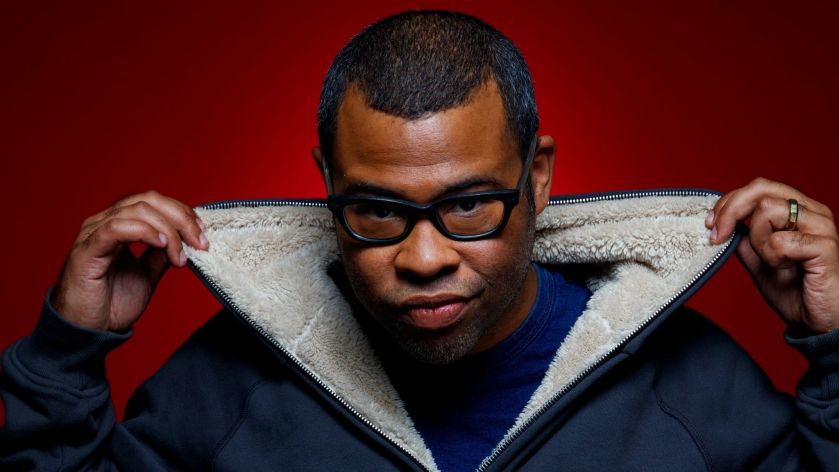
This year’s Oscar nomination broke with tradition by being slightly more inclusive.  After 87 years of being racist, and a couple of years of openly discussing their racism, the Academy put forth a slate of nominees that had a couple folks more racially representative of the America we live in. Jordan Peele kicked the party off right with nominations for Best Picture, Best Director, and Best Original Screenplay for his social thriller Get Out.

la-et-get-out-jordan-peele-racism-horror-america-20170224.jpg

Holding it down with black girl magic to spare, Dee Rees was nominated for Best Writing Adapted Screenplay for Mudbound, the first black woman to be nominated in this category. The same film that snagged Mary J. Blige a nomination for Best Supporting Actress.

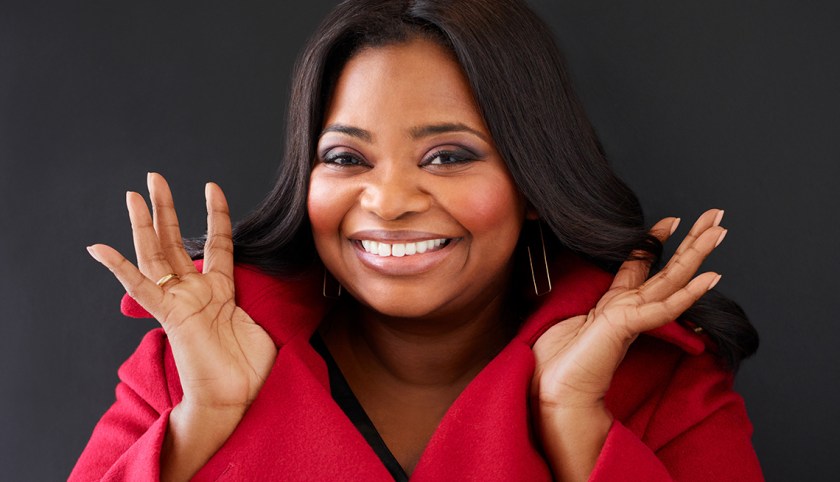
Making a return to the Oscars as a nominee is Octavia Spenser for her role in Shape of Water.

1140-dec-jan-atm-smiling-octavia-spencer.imgcache.rev3c7c544f9a7e52499128349339a7f404

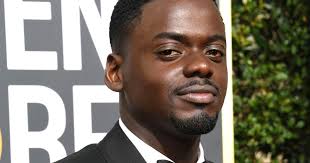
In this corner for the fellas is Daniel Kaluuya was nominated for Best Actor for his tear-jerking role in Get Out.

images.jpg

These nominees got here through hard work and amazing artistry.  Too often diversity selections are equated will being less than, only winning because they got a pity vote.  These stars show us that black shines bright, and brings in box office bling.

Progress: yes! Perfection….well, we’re not even close. In an interview with CNN #Ocsarssowhite creator April Reign cautioned, “When we’re still at the point where we’re pointing out the ‘first’ whatever, there’s still a long ways to go.”

With all this black excellence, you’re right to get hype:  you are witnessing the new black renaissance.  Someday your children’s children will read about the days that black activists, artists, writers, and luminaries led a civil rights movement that toppled white supremacy.  Your digital consciousness, which will most likely be kept in a small decorative box on the mantle, will tell them you remember the dark days of racism, and the light artists shone to help us see our way clear.

The Real Beauty Aisle

This week drugstore chain (and recipient of a fair share of my money) CVS announced that is will no longer allow photoshopped images on the beauty products it sells.  Any brand looking for shelf space will have to use images that are not retouched both on their products, and in-store marketing.  CVS’s own house brand will also meet the same standard.

Picture your local CVS (Rite-aid, Walgreens, whatever money-sucking hygiene and health store you use) Aisle after aisle of products that are supposed to keep you healthy stock the shelves.  While you decide what soap or shampoo is best, a woman gazes out at you, shiny and sunkissed with nary a wrinkle or blemish.  She is more simulation that sister. The hope is this replicant-alien will communicate to me that if I used this product I’ll look like her.  I don’t have to hang around the aisle all day to know I’ll never look like her.  She doesn’t even look like her.  Shame and shampoo drop into my basket together.  By the time I get to the counter, a hundred dollars worth of face cream and mascara and nail polish seem insufficient weaponry in the fight to look like the replicants poking their perfect faces out of every beauty ad. Trading dollars for disappointment isn’t a good value proposition for any business.

fea-retouching-hed3-2012

Magazines, long the primary purveyor of the beauty ideal, are making some occasional concessions to women wanting more realistic images of women on their pages.  But magazines make up only one aisle at CVS.  This latest move by the chain will create 9,600 stores where women will look like women.  Time will tell if this will result in a better shopping experience that translates to real dollars, but if the fashion industry in any indication, inclusivity pays. Size and age inclusivity is helping fashion brands like Eloqui and Universal Standard reach underserved markets.  The wild profitability that results from inclusive sizing and marketing is making even traditional retailers take notice.  Can the same happen for hygiene products?

With CVS’s move, the same ads will still be full of women.  I’m pretty sure they’ll still look amazing and beautiful, but now their faces will occupy the same physical reality that mine does.  The material consequences of time and air and life might show on their faces.  My trip to maintain my own face will be a little less fraught with angst. And together we’ll all just be women.

Your Country Of Origin Does Not Determine Your Humanity (Look At Us)

There are 54 countries on the continent of Africa with a population estimated at 1,273,131, 890.  There are 11,051,616 residents of Haiti  There are a total of 546,000 living in the United States. These 1,283,729,506 people, close to 20 percent of the world population, a group 4 times the population of the United States, cannot be dismissed with a single word.

Why are we having all these people from shithole countries come here?

–Donald Trump

Trump’s implication that people from countries Haiti and Africa and are undesirable while people from Norway are somehow deserving of immigration opportunities has the outrage machine working overtime, and rightfully so.  The President labels millions of people and dozens of countries with a single crass vulgarity, and once again, his comments clearly reinforce the same line of white supremacy he has drawn in the sand over and over.

It goes without saying, though Trump’s comments beg us to say it again:  Africa is a continent, huge and varied with every kind of climate, people of every color and faith. Haiti is a country that has made significant contributions to the world, including being the first country in the Western hemisphere to free itself from colonial rule (hmm, maybe that’s why he hates them…).

635349850328925343_tumblrmuto1v3wEF1qjcl7eo71280.jpg

What I’m not going to do is write a 1000 word defense of the countries he maligned.  Trump’s game of distraction and deflection sends us down the rabbit hole of racism every time he throws red meat to his base.  Haiti and Africa today, Mexico last year, some other country of black and brown people next month.  Instead, let’s question his underlying assumption–your country of origin determines your merit.

While different countries political and economic context certainly opens or closes opportunities and resources off for many, the humans in those countries are no less intelligent, capable or motivated to succeed.  When Trump maligns a whole people and when we line up to defend the countries he disrespects, we are debating whether a whole population, for good or bad, is deserving of opportunity.  Both sides of the argument are wrong: your country of birth does not determine your intelligence, your humanity, your potential or your ambition.


hqdefault.jpg
Anders Breivik, neo-nazi terrorist killed 9 people in a bombing then went on to shoot 69 people in an armed attack on a children’s summer camp in Norway. 


No country on earth is made up of only good deserving smart people–even Norway.  There are killers and con men even in the greatest countries (side-eye, Don the con).  There are actual geniuses and super-rich people even in the most resource-strapped country.  When Trump’s comments are demonstrably not fact-based, we know we’re in coded-language territory. Trump’s latest comments are no more than just another racist do whistle in a long song of dog whistles he has been playing since he began his campaign. And me? I’m not running when he calls.


Black Movie Ticket Sales Matter

Marvel’s much anticipated Black Panther is set to open February 16, but if you haven’t gotten your ticket yet you may find yourself out of luck.  Movie tickets went on sale this week and soon after began to sell out.  Even Black Panther star Lupita N’yongo found herself ticketless for opening night.

Set in part in an African country, Wakanda, untouched by colonialism, Black Panther promises to be all kinds of black excellence–from the costumes and set to the music. Kendrick Lamar is set to release a Black Panther album and contributes a theme song in the trailer below.  Black movie audiences are so here for it that groups are buying out theaters for black audience watch parties, and donating tickets in several cities to make sure no black boy or girl will be left out of having a ticket. What’s all the fuss about?

The importance of the representation of blackness in Black Panther is significant, too much to be stated in this small post, but before the movie is already released, advance ticket sales help open the door for future productions. Major movies are, after all, made not just for art, but for profit.  The more tickets sold, the better an investment that artist, director or a similar movie may be in the future.

If all these ticket presales result in a huge box office win for Black Panther opening weekend, the film will be in good company.  Last year, both Girls Trip and Get Out proved to be not only good filmmaking but great money making.  Girls Trip was the first black-led movie to make over $100 million.  Get Out, with an original budget of only 4.5 million was the most profitable movie of 2017.  Films like these, and potentially Black Panther show that films centering Black characters and themes can be extremely lucrative as well.

Hollywood has a bad track record when it comes to supporting films and filmmakers of color. Amazing films from directors like Ava DuVarney, Ryan Coogler, and  Barry Jenkins are paving the way for more films to be made by and about Black stories. Ticket sales like we’ve seen with Girl’s Trip, Get Out and now Black Panther help to break down the old myth that black movies aren’t profitable. So if you haven’t already gotten your tickets, get them now–those tickets are more than a night at the movies, they are part of a movement.

How Not to Be H&M

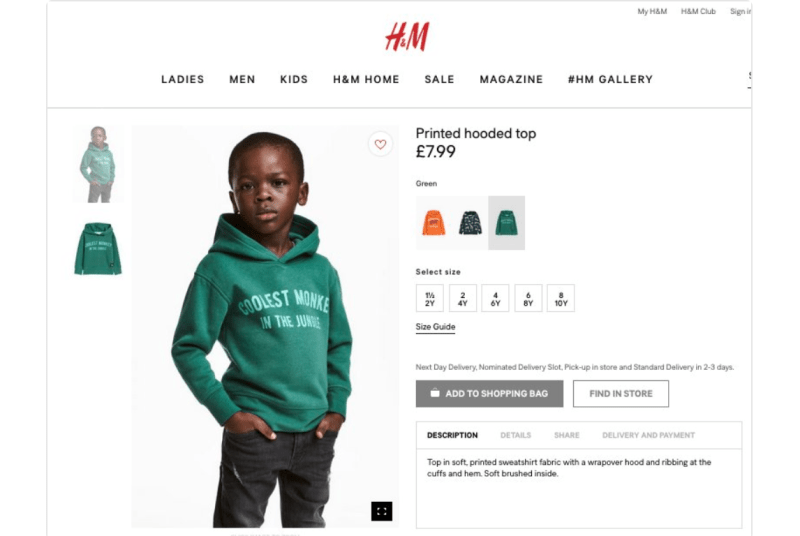
If you heard a rumble in the jungle yesterday is was the internet coming full force at Swedish retailer H & M for this offensive ad selling a child’s sweatshirt:

dj4convfxhaiedob9owv.png

The ad was taken down after a twitterstorm of critique, 960,000 news articles and spokesperson The Weekend announced he was breaking up with the brand. The damage is done. This isn’t H&M’s first rodeo, either.  They caught similar heat for using all white models in South Africa.  They had a wake-up call and apparently hit snooze.   In this latest all-too-predictable episode, alarm and outrage from consumers were met with a tepid apology from H & M:

“We sincerely apologize for this image,” the company said in a statement. “It has been removed from all online channels and the product will not be for sale in the United States. We believe in diversity and inclusion in all that we do.”

Yes, that is correct.  They believe in diversity but will still be selling the t-shirt somewhere where you snowflakes won’t whine about it–namely in the UK.  So H&M hit snooze again. That barely passes the apology test.


The association between black people and monkeys, an association used to dehumanize black people and justify atrocities ranging from slavery to lynching to police brutality is perhaps one of the most well know negative stereotype of black people.  The global domination of American media means that even in Sweden, the images of white supremacy are familiar. As many people tweeted, someone should have caught this.

We have to move beyond the outrage machine.  Advertisers are experts at advertising, but that doesn’t automatically make them experts in cultural consciousness. So what can ad agencies do to avoid these missteps that can cost billion-dollar companies big in terms of boycotts and brand damage?

Start at the top

Thinking about diversity and inclusion should start long before the pitch. Connecting with consumers is the very heart of advertising, and connecting with diverse audiences should be at the heart of your agency’s values.  Women, minorities, people of different backgrounds and abilities make up the majority of America–and the world.

Senior management sets the tone. This means that executive teams should model the inclusiveness they seek for the whole agency. Agencies looking to do diversity right need to be sure executives have the time, knowledge and tools needed to make sure that diversity and inclusion isn’t just a value on paper.  Training your management team and arming them with a strategic plan with specifics will ensure they are prepared to turn inclusion from a buzzword into an action verb.

 Get the right people in the room

When bad ads come out, people often ask who was in the room.  Chances are high that there was little diversity: people of color remain underrepresented in the creative workforce.   While there has been an increase in gender representation since the Mad Men days, racial and cultural diversity remains an elusive goal for many agencies.

Having a diverse group of people working at an agency isn’t just about doing the right thing, it is about assembling a team that will have the skills needed to thrive in a complex cultural environment. According to Adobe’s recently released report, Creativity’s Diversity Disconnect,  lack of access and information about potential careers in advertising are a part of the problem, but the same report also indicates that creatives of color found barriers to success even once they were in the workplace. Diversifying your workforce should include pipeline development, hiring, and most importantly retention and promotion strategies.  This is a long game–despite widespread agreement in the field that diversity is important there is a long way to go and it will take time. But it won’t happen at all if agencies don’t develop and execute strategic plans to make the shift.


Make Everyone Responsible

Lots of critics of H&M asked why the parents didn’t step in.  I suggest you don’t depend on the parents or the model to protect your billion-dollar brand. Making sure you have people who can spot an error before it goes out the door is key. That doesn’t mean scuttling your current workforce, it means training them. While you are working on growing diversity in-house, give all your employees the tools they need with training in culturally-conscious production.  Regular training, as well as opportunities to keep current and learn from others’ wins and losses, can help ensure there is always someone in the room ready to ask the right questions.

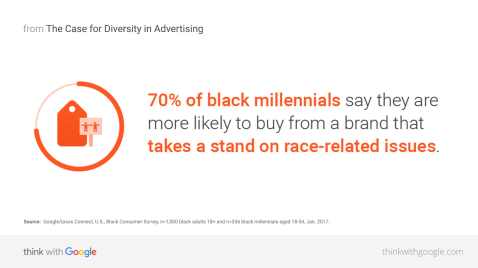
diversity-in-advertising-black-millennials-01-01-download.jpg

The data is clear–America is becoming more diverse.  Diverse audiences are looking for advertising that respects and reflects their experiences.   Not only that, when advertising reproduces old racist ideas, audiences have the tools to quickly organize, calling for boycotts and trashing offending brands. This isn’t a trend, it is a new day.  Agencies need to shift their thinking about diversity from an add-on to absolutely critical and find ways to support diversity efforts beyond the hire date. Leadership that models and values diversity, processes that consider culturally-conscious production, and time for training and discussion can make diversity everybody’s business, a value that will reflect in the work.


It’s 2018: You Survived the Apocalypse

As a kid, I had problems–bullying, a little racism, typical teen drama.  Sometimes when I would complain to my Dad he would impassively ruffle the pages of his newspaper and ask:

“Are you dead?”

Was he not listening to the blow by blow I just sobbed out?  What does being dead have to do with anything?  I would always spit out, “No,” with a pout.  I knew what came next.

“Then you’re fine.” He would offer from behind his paper.  Case closed.

What kind of bullshit was this?  Could he not see the angst and pain my personal battles were causing me? Didn’t he care?  I remember feeling that the simplicity of his answer was cold in light of the hard world outside our home.  As with all good lessons, only later I came to see I had it backward: the world was cold and he was helping me create a hardness inside me to protect against its chill.

Later, in my room, gnashing my teeth in anger at the exchange, what would make me most mad is that I could not deny that he was right.  No matter what anybody had said to me, no matter what emotional knots I tied myself up in over my battles, I was in fact, not dead, I was still here.  In the end, when I got out of my feelings, I found myself still alive.

859880_10151786375266375_2018643187_o.jpg

Over time this taught me no one’s taunts had the power to kill me, only to weaken me by pushing me off my mark, bending me out of integrity. Bullies were strongest when I let them push my buttons when I tried to go tit for tat.  The fear and anger I felt as a result of their harassment only clouded my ability to respond. Acknowledging that I survived each challenge I faced helped me see I could not control the actions of other people but I could control myself.  I could know that I was strong enough to face whatever was put in my way.  It was not really about being fine, it was about knowing that I had the power and fortitude to keep going and keep moving, motivated by a deep faith that I would persist.  I learned could thrive amongst difficulty.  Knowing this gave me the control I needed to face my bullies with courage and composure.

Over time, I began to ask myself that same question in times of difficulty.  When I thought I could not go on when the pain and misery of the world bent me out of integrity I would perform a quick gut check: am I dead? No? Then keep it pushing. I cannot control every monster but over time I learned I could control my own demons. This is the key to staying in the fight, to living to fight another day.

2017-01-21t02-05-17-166z--1280x720.nbcnews-ux-1080-600.jpg

Sometimes the world seems too much to bear.  I remember this time last year, seized with fear and uncertainty at the prospect of a Trump presidency,  at a country set to explode.  And then 2017 came. And we did blow up.

This year was a raging dumpster fire beginning to end.  A year of Trump driving America right over a cliff–killing Obamacare and net neutrality, defunding science, tax breaks for the rich, the immigration ban, appointing unqualified judges and championing racism and sexism and classism as patriotic values.  The country I love is on fire. The world is teetering on the brink of chaos. Our best hope seems to be a man with a rocket ship to Mars.   The details of 2017 read like a list of signs of the apocalypse right out of several Hollywood movies.

cannibals.jpg

And yet, we are not dead.

Even stranger, I feel wildly optimistic. The ground is razed and I’m in a mood to build. See, here’s a little secret I learned about the apocalypse.  The end is never the end, only a new beginning. The word apocalypse comes from the Greek apo–un and kaluptein–to cover–to uncover, to reveal.  An apocalypse isn’t an end, it’s an unveiling.

In the purest sense of the word, 2017 was a true apocalypse.  America had long slumbered in a self-congratulatory slump, shoving a big foam we’re-number-one-finger in the world’s face while racism and sexism seethed unseen beneath the mainstream’s gaze.  Globalization turned us into a nation of consumers, too proud to realize we were slipping behind in the knowledge economy. The untreated virus of white supremacy weakened our country for centuries and the only treatments rendered were to deny, destroy and disempower communities of color. Patriarchy kept one boot squarely on half the population, capitalism kept both boots on us all.  With all that going on, we were too busy buying shit and numbing out to the pap of spoon-fed pop culture to notice.

Then came 2017: the rise of the alt-right. The blossoming of the new black civil rights movement.  #Me Too. And Trump, Trump a pimple that exploded in all the ugliness beneath America’s skin. There are no more secrets here.

As a wise man once said, “if you don’t know, now you know…”

152051-full.jpg

The scabby underbelly has revealed itself, disallowing us the ability to ignore the contradictions at the heart of our country, contradictions that threaten to tear us all apart:  if we are the land of the free, why are we chained in debt? if this is the home of the brave, why have we ignored those who stand up to speak truth to power? if we are all created equal, then why are we so unequal? Can we ever be a more perfect union?

As painful as this year has been, we can see plainly what our country is.  Gone are our rose-colored glasses, numbness turned to rage and fear. The trick now is to not let the emotions of these times cloud our ability to think clearly, act cooperatively and build towards a new vision, not just defend against the daily onslaught. As difficult as it is to be woke, it is the only way forward.

The apocalypse is an end only to the status quo.  The upheaval is real, the chaos of old structures shaking to their core terrifying, but hush your fear and look for the opportunities to build.  Channel your anger to weather the upheaval. The apocalypse ushers in a new time, the next paradigm.  Don’t get lost in the distractions while new powerbrokers make new rules. The resistance is working, too, each of us in our own way. We have the knowledge, the technology, and–I know with every fiber of my being–the human compassion needed to build a better world, more perfect than our forefathers could imagine.

SpaceX1.jpg

So on this first day of 2018, I offer you this gut check:  if you are reading this, you’re not dead.  You’re still here. And 2017 was a bitch, so that’s really saying something. Strap on your helmet. Like Elon Musk’s rockets, we have explosions at each stage, shedding a firey ball of flame across the sky, but I assure you we are ascending. As we jettison the lies we had come to depend on, we will be free to evolve past our imperfect past.  As long as we don’t burn up in the process, we are entering the wider universe. We are transforming into something more.